

Learning top rated cruise comfort tips for motion sickness sufferers saved my vacation after a brutal first night in the open Atlantic. Staring at an oscillating horizon while your stomach does flips makes you regret leaving solid ground immediately. You should not have to spend your entire dream sailing clutching a trash can in a dark bathroom. Simple strategies keep your inner ear steady so you actually have fun.
1. Book Midship Cabins: Top Rated Cruise Comfort Tips for Motion Sickness Sufferers
Reserving a stateroom located low and centered acts like the pivot point on a seesaw. Ships rotate around their center of gravity, meaning midship cabins experience minimal vertical bounce and lateral roll. Choosing deck five or six near the central elevator bank cushions you against rough swells.
Always study the ship deck plans carefully before confirming your room reservation. Avoid bow or stern rooms where heavy pitching lifts and drops the bed while you try to sleep. Locking in a midship stateroom location provides the ultimate baseline comfort for your entire voyage.
2. Take Meclizine Before Setting Sail
Taking preventative motion sickness medication before the ship leaves the pier works far better than treating active nausea later. Over-the-counter antihistamines like Bonine block the neural signals between your inner ear balance center and the vomiting reflex in the brain. Taking your dose with lunch before embarkation stops symptoms before they start.
Chewable meclizine hydrochloride tablets cause far less drowsiness than older allergy medications like dimenhydrinate. Keep a small blister pack in your pocket so you can take another dose twenty-four hours later without searching through luggage. Staying ahead of the motion curve keeps your head clear and your stomach quiet.
Also Read: Easy Destination Research Tips for People Short on Time 2026
3. Apply Transdermal Scopolamine Patches
Applying a medicated patch behind your ear provides a slow, steady release of motion-blocking medication for three full days. Prescription transdermal patches use scopolamine to suppress vestibular excitation before rough seas toss the ship. You stick the tiny round adhesive to hairless skin behind your earlobe four hours before departure.
Wash your hands thoroughly with warm soapy water right after applying or handling the patch. Touching your eyes with residue causes temporary pupil dilation and blurry vision that can ruin your reading time by the pool. A scopolamine transdermal patch delivers reliable medical relief across long transatlantic crossings.
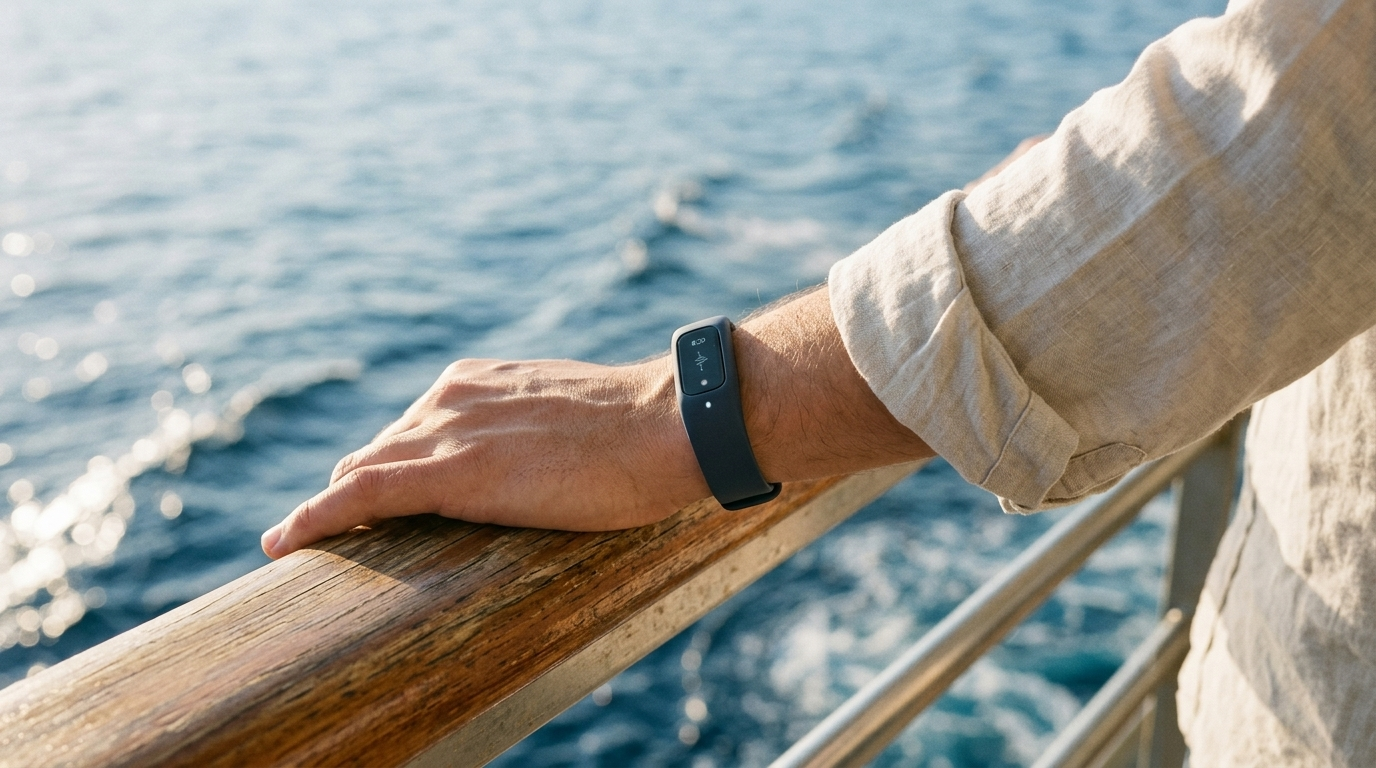
4. Wear Electronic Acupressure Pulse Bands
Electronic stimulation devices send mild electrical pulses directly to the P6 acupuncture point on your inner wrist. These rechargeable wristbands stimulate the median nerve to disrupt nausea signals traveling to the brain stem. You adjust the pulse intensity through multiple power levels until you feel a gentle tingling in your palm.
Investing in a Reliefband wearable device gives you drug-free control without any grogginess or dry mouth side effects. Fasten the band securely with a dab of conductive gel before stepping onto high-speed tender boats heading ashore. It starts working within five minutes even after nausea symptoms have already begun.
5. Pick Larger Ships with Modern Stabilizers
Giant cruise vessels utilize massive computer-controlled hydrofoil fins extending below the waterline to cancel out ocean roll. Megaships from Royal Caribbean or Celebrity Cruises displace over one hundred thousand tons, cutting smoothly through choppy waves that toss smaller expedition vessels. Booking these larger hulls is essential when searching for top rated cruise comfort tips for motion sickness sufferers.
Look for ships built within the last decade because modern hydrodynamic hull shapes handle rough seas with incredible grace. You barely notice standard ocean swells while strolling through central atriums or dining rooms on these massive platforms. Choosing a modern mega cruise ship dramatically reduces the physical sensation of moving across open water.
6. Snack on Tart Green Apples and Crackers
Grabbing a basket of crisp Granny Smith apples from the buffet calms a churning stomach surprisingly fast. Green apples contain pectin and natural sugars that neutralize stomach acid and stabilize erratic gastric contractions. Cruise ship crew members rely on this simple remedy whenever heavy storms roll in unexpectedly.
Pair apple slices with plain saltine crackers to absorb excess digestive fluids without irritating your stomach lining. Keep a couple of whole green apples on your cabin desk for late-night snacking when the ship crosses choppy channels. Snacking on fresh tart green apples provides instant comfort without relying on extra medications.
7. Fix Your Eyes on the True Horizon
Walking out onto an open lower deck lets your eyes see the stable horizon that matches your inner ear sensations. Motion sickness develops when your eyes tell your brain the room is still while your balance fluid feels the ship rocking. Glancing at the distant sea line resolves this sensory conflict immediately.
Head down to deck four or five where wide outdoor walking promenades run along both sides of the hull. Sit quietly on a wooden deck lounger and breathe the cool salty breeze while keeping your gaze on the horizon. Finding an open promenade deck chair anchors your equilibrium faster than pacing inside indoor hallways.

8. Chew Real Gin-Gins Ginger Candies
Concentrated real ginger root has soothed maritime nausea for centuries by naturally dampening gastric spasms. Pure ginger compounds called gingerols speed up stomach emptying, preventing that heavy sloshing feeling during rolling seas. Packing individual ginger lozenges gives you portable relief whenever you board tour buses or small tender boats.
Look for potent treats like Gin-Gins hard ginger candy made with pure unrefined cane sugar and fresh ginger puree. Sucking on one candy every four hours coats your throat with warmth while easing nervous stomach butterflies. Keeping a pouch in your day bag guarantees fast organic relief anywhere on the ship.
9. Skip Heavy Buffet Meals in Choppy Waters
Eating greasy burgers or acidic tomato pastas while sailing through a weather front overwhelms your digestive tract. Rich fats delay gastric emptying, leaving heavy meals sitting in your stomach while the vessel rises and falls. Sticking to small, frequent portions of mild lean proteins and simple starches keeps your digestion calm.
Order light broth soups, plain grilled chicken breast, white rice, or dry toast from room service if dining rooms feel overwhelming. Drink warm chamomile tea or flat ginger ale to soothe sensitive stomach walls between light meals. Choosing bland digestive meals prevents routine digestive upset from turning into full motion sickness during stormy passages.
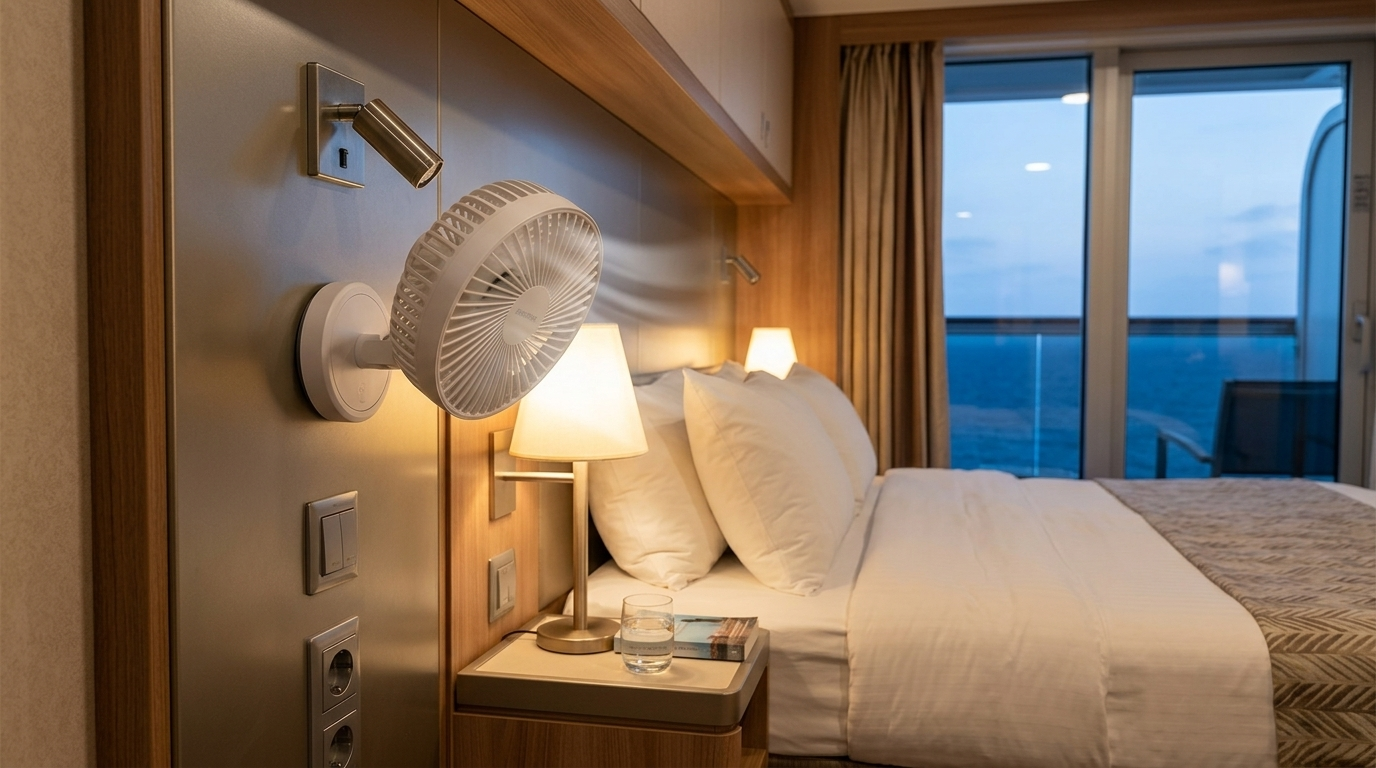
10. Mount Portable Magnetic Fans in Your Cabin
Stagnant, stuffy stateroom air triggers claustrophobia and worsens nausea when you lie down in bed. Bringing small battery-operated fans with strong magnetic bases stands out among top rated cruise comfort tips for motion sickness sufferers. A crisp breeze blowing over your face calms the vagus nerve and prevents cold sweats.
Position your magnetic cabin fan directly above your pillow so fresh air circulates across your cheeks all night. Plug the unit into a bedside USB port or portable power bank to run continuously while you sleep. The gentle cooling hum also provides soothing white noise that drowns out ship engine vibrations.
11. Sip Electrolyte Drinks Throughout the Day
Dehydration accelerates dizziness and headache symptoms that mimic severe motion sickness. Air conditioning throughout large ships strips humidity from indoor air, drying out your respiratory system and depleting fluid levels rapidly. Replenishing lost minerals keeps your circulatory system stable and your blood pressure regulated against tilting decks.
Stir single-serve electrolyte packets into your refillable water bottle twice daily rather than sipping plain tap water. We love using Liquid I.V. hydration multipliers because they deliver essential sodium and potassium straight to your bloodstream. Staying properly hydrated prevents dull headaches that make mild ship motion feel ten times worse.
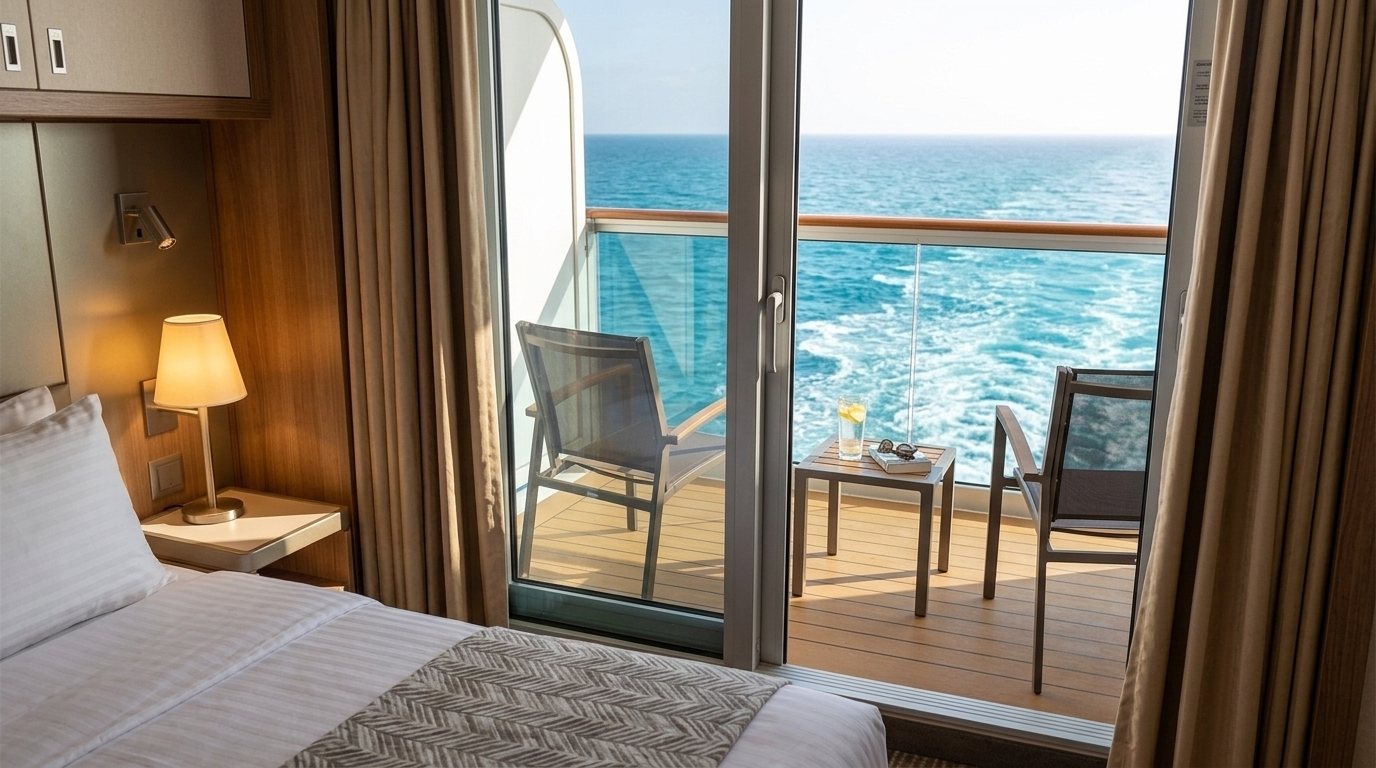
12. Reserve Balcony Cabins for Immediate Fresh Air
Stepping onto a private veranda gives you instantaneous access to cool, rushing ocean air without running through public corridors. Private balconies let you gaze directly at the ocean horizon in total privacy while resting in your bathrobe. The ability to crack your sliding door at night creates steady airflow that keeps your cabin fresh.
Book your private space on lower balcony tiers near the middle of the vessel for minimal sway. Sitting outside in your own deck chair with a cold drink lets you ride out mild sea chop safely. Investing in a private balcony stateroom provides immense psychological comfort and physical relief during extended sea days.
13. Wear Elastic Acupressure Wristbands
Elastic knitted wristbands with plastic studs apply continuous mechanical pressure to the Nei-Kuan pressure point. Positioned three finger-widths below the wrist crease, this pressure point interrupts nausea signals through ancient acupressure pathways. These lightweight bands provide completely safe, zero-drug relief for kids, pregnant travelers, and sensitive adults alike.
Slip on a pair of Sea-Band knitted wristbands before unpacking your suitcases in your stateroom on boarding afternoon. Make sure the white plastic beads press firmly against the center tendons of both wrists for maximum effectiveness. Wearing them around the clock prevents sudden nausea spikes when the ship accelerates into open channels.
Frequently Asked Questions
Which cruise cabin location has the least motion?
Cabins located on lower passenger decks near the middle of the vessel experience the least motion. These staterooms sit closest to the natural center of gravity and roll axis of the ship. Avoid rooms located far forward in the bow or high up on top decks.
What are the best top rated cruise comfort tips for motion sickness sufferers on stormy sea days?
Head down to lower public decks and keep your eyes focused on the outdoor horizon line. Sip cold ginger ale, snack on green apples with crackers, and take non-drowsy meclizine before rough seas intensify. Avoid reading small phone screens or staying enclosed in windowless interior spaces.
Does cruise ship guest services provide free motion sickness medicine?
Most cruise ship guest services desks provide complimentary packets of meclizine or dimenhydrinate upon request. Ship medical centers also stock stronger prescription remedies, though private consultations may incur standard clinic service fees. Packing your own trusted brands in advance saves time and prevents unnecessary middle-of-the-night trips downstairs.
Can you get seasick on a modern mega cruise ship?
You can still feel seasick on modern mega ships during severe ocean storms or high wave swells. Advanced computer stabilizers reduce side-to-side roll by up to ninety percent, but they cannot completely eliminate vertical pitching motions. Taking basic preventative measures ensures comfort regardless of sudden weather changes.
How long does cruise motion sickness usually last?
Most cruise passengers adapt to the movement of the ocean within twenty-four to forty-eight hours as their vestibular system adjusts. Using acupressure bands and medication during the first two days helps your body find sea legs smoothly. Severe symptoms fade quickly once you step onto solid port ground.
Conclusion
Sailing across open ocean waters should fill you with excitement rather than dread of an upset stomach. With the right cabin, solid preventative remedies, and a few smart packing choices, you can conquer the seas in total comfort. Which of these cruise comfort tips will you pack in your carry-on for your next sailing?
[…] Also Read: Top Rated Cruise Comfort Tips for Motion Sickness Sufferers 2026 […]