

Finding beginner friendly travel journaling ideas for highly sensitive people changed everything when travel sensory overload used to leave me crying in airport bathrooms. When train horns, pungent street markets, and endless crowds overwhelm your nervous system, you need a safe harbor. A blank page gives your overstimulated brain room to breathe. Grounding yourself on paper turns exhausting journeys into restorative adventures you actually enjoy.
1. Five-Minute Sensory Grounding: Beginner Friendly Travel Journaling Ideas for Highly Sensitive People
Writing down five distinct things you can see, four you can feel, three you hear, two you smell, and one you taste anchors your wandering attention. Highly sensitive travelers process environmental stimuli at profound depths, which easily leads to cognitive exhaustion. This simple structured formula pulls you out of your spinning head and back into physical reality.
Sit down on a shaded park bench whenever museum crowds start feeling suffocating. Pull out a pocket-sized Leuchtturm1917 notebook and list your immediate sensory inputs without worrying about fancy prose. The exercise regulates your heart rate before full overstimulation sets in.
Also Read: Top Rated Cruise Comfort Tips for Motion Sickness Sufferers 2026
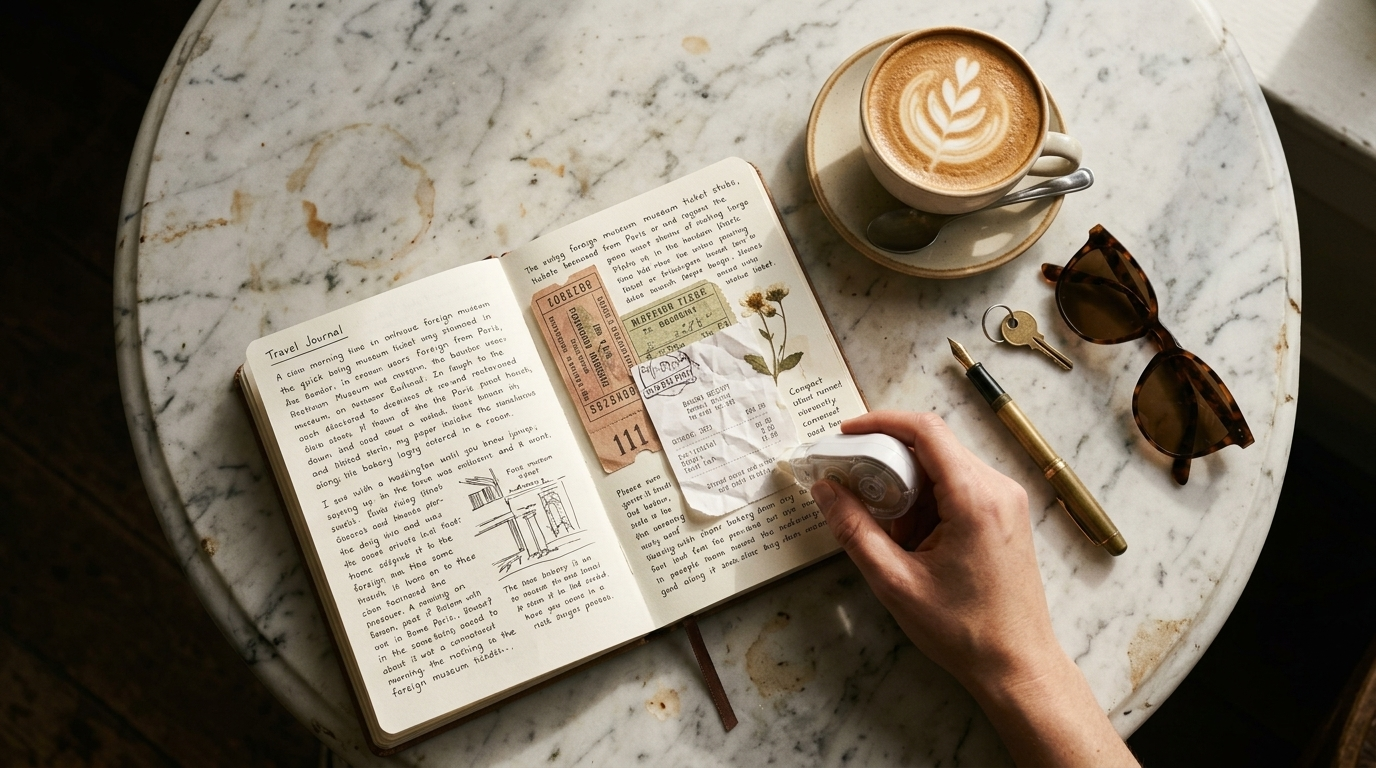
2. Ephemera Paste and Go Collage Pages
Tucking museum receipts, bakery paper bags, and bus stubs directly onto paper captures the physical spirit of a town without demanding long journal entries. Sensitive minds often absorb vivid visual memories, but verbalizing them after twelve hours of walking feels daunting. Scrapbooking loose ephemera creates a gorgeous collage without writing fatigue.
Carry a compact Tombow tape runner in your daypack to glue paper treasures into your notebook as you collect them at cafes. You can write a tiny date or street name right beside each ticket stub. Travel Journaling for Highly Sensitive People 2026. Flipping through these tactile layers later brings your travels back to life instantly.
3. Single-Color Ambient Observation Sketches
Drawing tiny architectural outlines using only one colored pencil removes the intimidating pressure of artistic perfection. Highly sensitive observers constantly notice tiny wrought-iron balcony curves and intricate cobblestone patterns that others overlook. Limiting your palette to a single soothing tone keeps sketching calming rather than stressful.
Grab a soft Derwent drawing pencil in terracotta or slate blue during a quiet afternoon tea break. Spend ten minutes tracing the simple silhouette of an old streetlamp or ceramic flowerpot across your page. Travel Journaling for Highly Sensitive People 2026. The gentle rhythmic scratching of pencil on paper creates immediate mental tranquility.
4. Single-Sentence Nightly Micro-Summaries
Recording just one meaningful sentence before bed keeps your travel record consistent without draining your remaining social battery. Trying to document entire itineraries word for word overwhelms sensitive creators who already run on low mental energy at night. A concise one-liner captures the emotional core of your day without guilt.
Focus your sentence strictly on one striking feeling, delicious flavor, or unexpected moment of kindness from a stranger. I jot these quick reflections down using a smooth Pilot G2 gel pen right on my bedside table before turning off the lamp. Travel Journaling for Highly Sensitive People 2026. This tiny habit preserves precious travel memories forever.
5. Emotional Weather Forecast Check-Ins
Sketching simple sun, cloud, or rain icons next to your notes helps you track your fluctuating internal energy levels across busy travel days. HSP travelers absorb the emotional moods of strangers and bustling subway stations without even realizing it. Mapping out your internal climate lets you acknowledge emotional fatigue without feeling broken.
Draw a little thunderstorm cloud if a crowded train terminal made your chest tight, followed by three words describing what helped you recover. Travel Journaling for Highly Sensitive People 2026. Noting your patterns helps you realize that beginner friendly travel journaling ideas for highly sensitive people should always honor your emotional pacing. Keeping an emotional energy log validates your natural sensitivity as a travel superpower.
6. Soundscape Mapping and Acoustic Notes
Listing the distinct audio layers around you turns irritating background noise into fascinating ambient poetry. Sensitive ears frequently struggle with jarring sirens, church bells, and cafe chatter colliding at once. Cataloging these acoustic details on paper helps your brain organize and detach from distressing sonic chaos.
Find a fountain square and write down the distant rumble of mopeds, splashing water, and whispering pigeons in three neat columns. Travel Journaling for Highly Sensitive People 2026. I highlight soft sounds using a pastel Zebra Mildliner pen to draw my attention toward soothing noises. Reframing auditory noise as field recording data quiets your acoustic overwhelm remarkably fast.

7. Tactile Texture Rubbings from Local Landmarks
Placing your journal page against rustic surfaces and rubbing them with graphite creates a tangible imprint of historic architecture. Sensitive explorers connect deeply with physical textures like weathered wooden shrine gates, carved stone masonry, or brass memorial plaques. This tactile technique documents historic places without making you stand stationary in crowded tour groups.
Press your paper firmly against a textured wall and glide a broad graphite sketching stick across the surface in smooth strokes. The resulting textured pattern reveals intricate grain details that photographs completely miss. It gives your fingers an earthy, calming sensory outlet after hours of sensory saturation.
8. Morning Sanctuary Inventory Lists
Detailing the peaceful elements of your morning accommodation creates a serene psychological buffer before you venture into crowded streets. HSP travelers need quiet morning rituals to steel their nervous systems against foreign noises and fast-moving transit systems. Writing down peaceful domestic details grounds your morning in safety.
Note the soft linen texture against your skin, the sunlight hitting the curtains, and the aroma of brewing dark roast coffee. Exploring beginner friendly travel journaling ideas for highly sensitive people reminds us that small quiet moments matter just as much as grand monuments. Drafting a morning sanctuary inventory fills your cup with calm before stepping outdoors.
9. Quiet Corner Cafe Reviews
Rating local coffee shops specifically on their acoustic comfort, soft lighting, and corner seating creates an invaluable personal refuge guide. Sensitive travelers often search desperately for calm spaces to decompress between intense sightseeing excursions. Reviewing cafes through a sensory lens gives your journaling a practical, comforting mission.
Rate each spot out of five stars for gentle background music, natural window light, and tucked-away booth seating. Stick a printed cafe napkin into your Midori traveler notebook alongside your comfort notes for future reference. Building your own directory of restorative urban sanctuaries keeps stressful travel days manageable.

10. Raw Brain Dumps for Sensory Reset
Scribbling messy thoughts across unlined pages without filtering allows pent-up tension to escape your overwhelmed system safely. High sensitivity often traps chaotic visual and social impressions in your chest, generating sudden anxiety during long travel days. Unstructured free-writing provides an immediate pressure release valve.
Let your handwriting become large, erratic, and loose as you dump out everything that irritated or overwhelmed your senses today. Close your journal firmly when you finish, sealing those heavy impressions away so your mind can rest. Practicing a cathartic brain dump restores mental clarity before you head down to dinner.
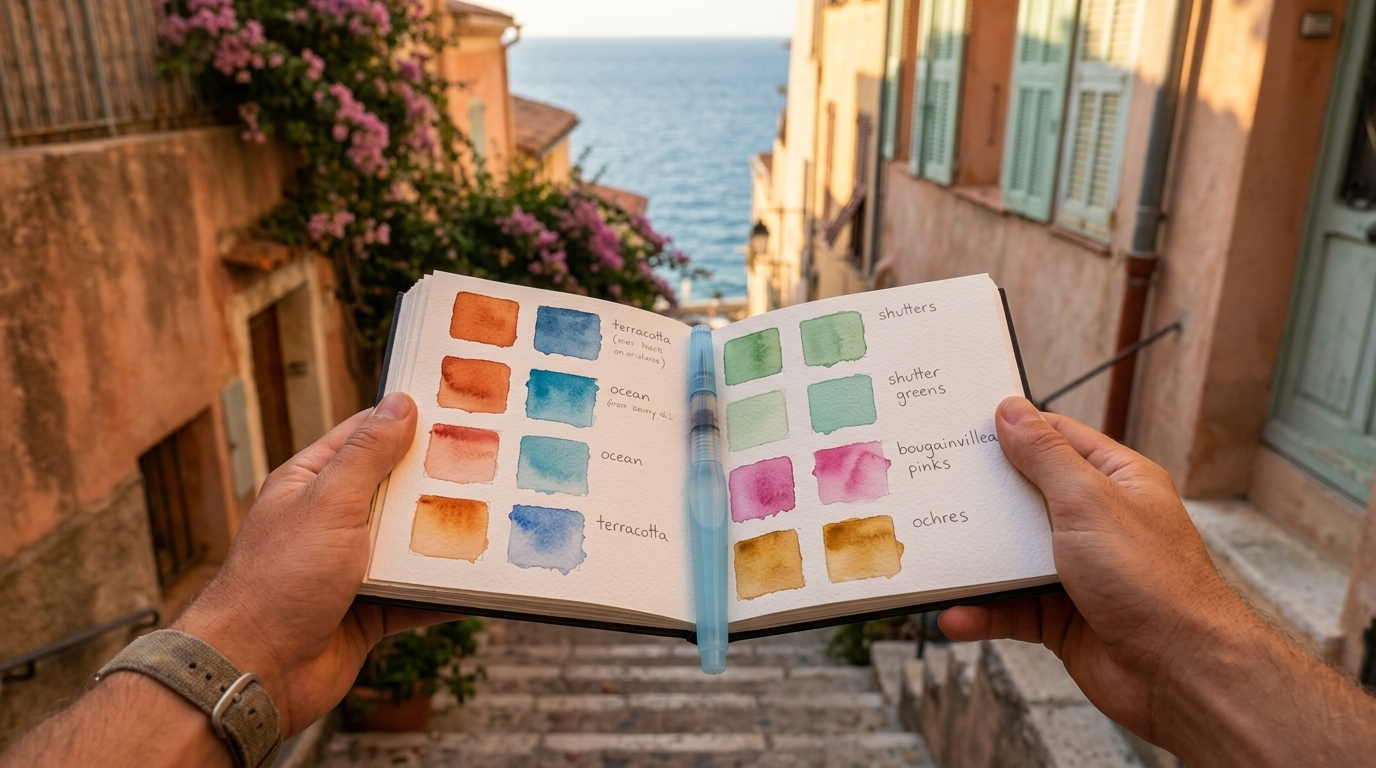
11. Color Palette Swatches of Neighborhoods
Swatching the predominant colors of a historic neighborhood using watercolor pencils captures place identity with gentle grace. Sensitive travelers naturally pick up on subtle color harmonies like faded terracotta walls, dusty olive leaves, and seafoam green shutters. Translating these tones onto paper feels meditative and visually satisfying.
Dab four or five colored squares in a neat row across your page and blend them with a portable water brush pen. Label each swatch with the street where you spotted the hue, like canal reflection blue or bakery awning yellow. This quiet visual exercise deepens your appreciation of subtle scenery without draining energy.
12. Snippets of Overheard Kindness
Transcribing brief snippets of gentle human interaction reminds you that the world is fundamentally warm, even when crowded cities feel harsh. Sensitive travelers often feel bruised by gruff transit conductors or pushing commuters. Writing down sweet gestures balances your perspective and protects your tender heart.
Record an elderly couple sharing a pastry, a barista greeting a regular by name, or a mother singing quietly on a bus. Using these beginner friendly travel journaling ideas for highly sensitive people anchors your trip around compassion rather than stress. Collecting heartwarming dialogue snippets preserves the tender humanity of every town you visit.
13. Solitary Rest Pause Logs
Documenting your dedicated resting intervals reframes downtime as a vital part of your itinerary rather than wasted vacation time. Sensitive explorers frequently feel guilty for returning to hotels at three in the afternoon for quiet naps. Validating your recovery breaks on paper reinforces self-compassion.
Write down how forty minutes lying on hotel pillows with noise-canceling headphones recharged your spirits for the evening. Keep your notes inside a durable Moleskine hardcover journal that travels well in your tote bag. Celebrating your structured rest pauses ensures you travel sustainably without facing emotional crashes.
14. Letters to Your Future Self on Postcards
Penning short encouraging notes on scenic vintage postcards creates a direct lifeline between your adventurous traveling self and your future routine. Highly sensitive people experience profound personal growth during travel, yet quickly forget those insights once back home. Writing to your future self locks in those gentle awakenings.
Buy a postcard showing a serene landscape from a local street vendor and write about what this journey taught you about your own resilience. Mail the postcard home to your permanent address using a local vintage postal stamp. Reading your own calm words weeks later brings travel wisdom straight into your daily routine.
Frequently Asked Questions
What is the best type of notebook for sensitive travelers?
Choose a compact, lightweight journal with thick, bleed-proof paper that lays flat easily on small cafe tables. Soft dot-grid or blank pages give you complete creative freedom without rigid lines. Hardcover bindings protect your pages from rain and crowded daypacks while offering a firm writing surface anywhere.
How do beginner friendly travel journaling ideas for highly sensitive people help with burnout?
Journaling slows your mental intake by channeling chaotic sensory signals into structured reflections. It allows your nervous system to rest and digest foreign stimuli instead of remaining stuck in hyper-arousal. Taking regular writing breaks prevents full sensory shutdown and emotional exhaustion during long, stimulating travel itineraries.
How much time should you spend journaling each travel day?
Spend between five and fifteen minutes per day on your journal. Keeping your sessions short prevents journaling from feeling like a demanding chore on top of busy sightseeing. Brief morning intention notes or five-minute evening summaries provide immense mental relief without cutting into your sleep or relaxation time.
What should you do if you feel too exhausted to write while traveling?
Tape in a ticket stub, sketch a quick three-second emotion icon, or press a dried blossom between the pages. You do not need complete grammatical sentences to capture the essence of your journey. Physical ephemera and simple pencil doodles preserve memories beautifully when your words run dry.
Can travel journaling replace sketching or taking photos?
Journaling works alongside photography by capturing the internal feelings, aromas, and acoustic textures that cameras miss. Combining quick written impressions with pasted ticket stubs and phone snapshots provides a rich, multi-dimensional record of your journey that honors your deep perceptive nature as a sensitive traveler.
Conclusion
Honoring your sensitivity while exploring unfamiliar lands transforms travel from a sensory test into deep personal nourishment. Grab a small journal, lean into the quiet moments between crowded sights, and write your own gentle story. Which of these journaling ideas resonates most with your sensitive traveler spirit?


[…] Also Read: Travel Journaling for Highly Sensitive People 2026 […]